Two Days in Rocky Mountain National Park
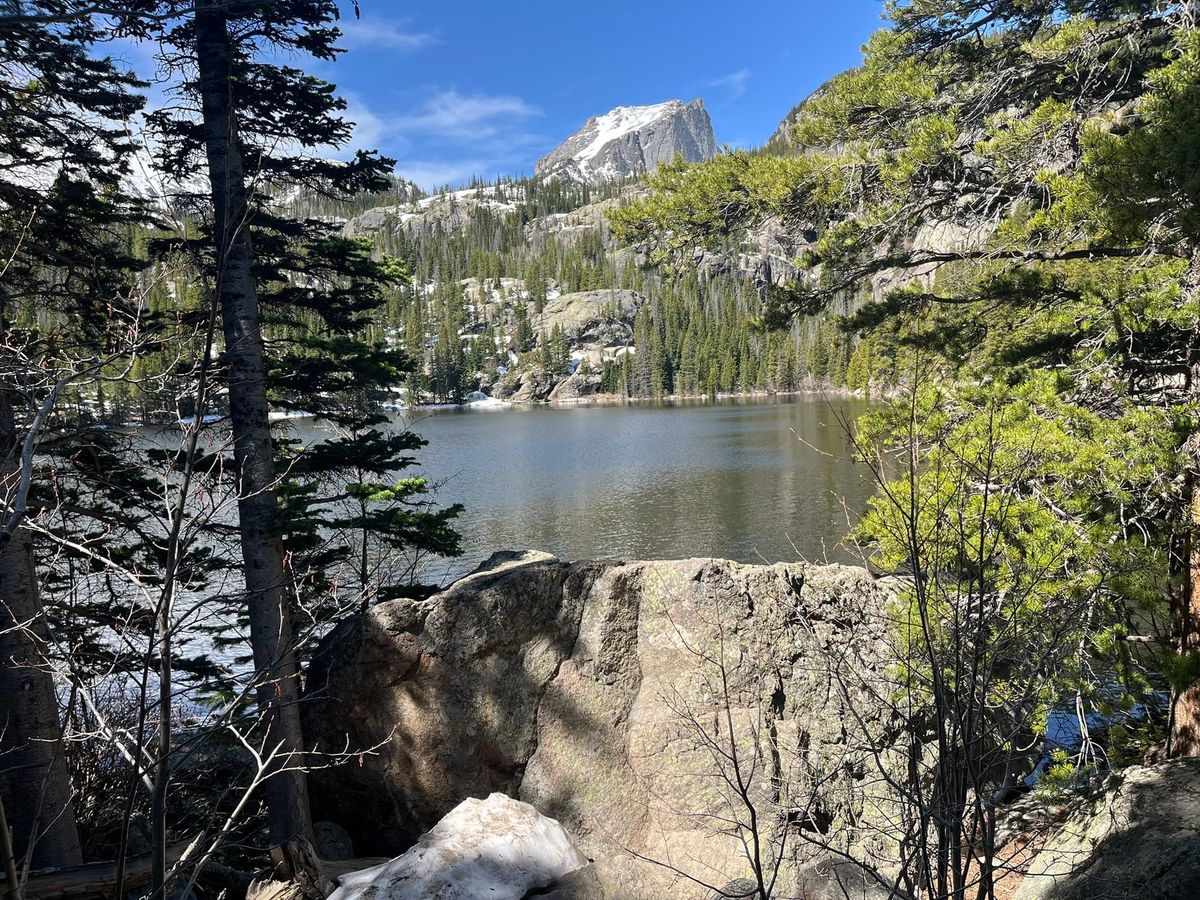
As a lover of national parks, Rocky Mountain National Park is my “home” national park, just 45 minutes from my house. We even got married there! There are no hidden secrets here, just a solid, tried-and-true itinerary for people of average fitness.
A few things to keep in mind, Rocky Mountain National part is in, well, the mountains. Elevations range from 7,600 feet to over 14,000 feet. Altitude sickness is a real danger, and it is important to acclimate slowly, drink a lot of water, and not overdo it. Being at altitude also means being closer to the sun, where UV rays are strong, so a hat, sunshirt, and sunscreen are strongly advised. In summer months, Colorado also has a monsoon season that usually runs from sometime in July to around mid-September. Visitors can expect most mornings to be beautiful, dry, and sunny. As the day moves on, thunderstorms become more likely. It is best to plan to be done with any higher-altitude and exposed hikes by 2pm and reserve the afternoon and evening for more casual sightseeing and animal spotting. Also, wild animals are wild. Be sure to keep your distance from deer, elk, moose, marmots, ground squirrels, and the occasional bear and rare mountain lion or other animal.
Whether you are a morning person/group or not, Rocky Mountain National Park is best experienced by getting to the park early. Camping in the park or staying in gateway town Estes Park are the most convenient places to stay, but nearby towns like Loveland, Longmont, or Boulder (my town!) also work if you are willing to drive more. Although this article is focused on visiting from the east side, it can certainly be modified to stay on the west side in Grand Lake, Granby, or Winter Park where hotels are few but vacation rentals are many. The days here can also obviously be reversed, and the option of doing so makes it easier to be sure to have the right entry reservations and pick an itinerary that is suitable for the weather, with dry weather being more important for the Bear Lake corridor day.
This itinerary assumes visitors will have a car, but say tuned for a future post on RMNP without a car! Entering RMNP by car requires advanced planning. From mid-May to mid-October, timed entry reservations are required to enter the Bear Lake corridor between 5am and 6pm, and for the rest of the areas on this itinerary between 9am and 2pm. Details on getting timed entry reservations can be found here.
Day One: Bear Lake Corridor
I recommend entering the park at the Beaver Meadows Entrance Station. The earlier the better when hitting the Bear Lake corridor, arriving to your first stop as soon as feasible after sunrise. It is best to secure an entry time before 10am to make the most of this plan, but visiting outside of those hours can also be an amazing experience. If you are getting to the Bear Lake Road area before 6:30am, head straight up to Bear Lake by car and park in the Bear Lake lot. If arriving after 6:30am, head to the Bear Lake park and ride lot and catch a shuttle up to Bear Lake. The shuttle is very convenient and runs from 6:30am-7:30pm and makes it possible to see everything on the Bear Lake corridor without worrying about finding multiple parking spaces at trailheads with limited parking. More information on the shuttle can be found here.
Pack a cooler with lunch and leave it in your car, making sure that food is out of sight and the car is locked to prevent bears from breaking into your car.
Bear Lake Trailhead
There is so much to see from this trailhead, it would be easy to spend a whole day here. This itinerary hits the highlights for first-time or infrequent visitors. The NPS map of this area is a great resource, found here. You can get a paper copy of this map at the trailhead or from a ranger. Rangers are always at the trailhead and happy to answer questions.
Starting at 9,475 feet, hike around the relatively-flat Bear Lake, a beautiful and accessible ½ mile loop, which does contain some steep spots on the far side of the lake from the trailhead. This area can have snow well into June and from September, so be sure to check conditions and bring suitable shoes, micro-spikes, or snowshoes depending on the weather. Depending on your pace and how many stops to ooh and ahhh at the scenery, this hike will take 20-45 minutes.
After this first mountain lake, take stock of how everyone in your party is feeling. If anyone is feeling short of breath or like the hiking is too much, this can be a great stopping point for this area. If everyone is feeling good, it is time to head out to the triple-lake hike of Nymph Lake, Dream Lake, and Emerald Lake. This is one of the most beautiful hikes in the park, and it is very popular so you will not be alone. The 3.6 mile round-trip, out-and-back hike to Emerald Lake is suitable for most people of average fitness, but the difficulty of the hike can vary based on conditions such as how hot it is and how much snow are on the trail. If you can’t make it all the way to Emerald Lake, don’t worry—each of these lakes is its own amazing destination. Allowing for stops to view each lake and enjoy the scenery, plan round 2.5 hours for this hike. Take along a snack or two to eat while viewing the lakes.
When almost back to the trailhead, consider again how everyone is feeling. If the group is still up for more hiking, catch the trail to Alberta Falls just before you get back to the Bear Lake Trail Head. It is around 1.2 miles one-way from the beginning of the trail near Bear Lake to the Glacier Gorge Trailhead. This is a beautiful falls, and the hike offers some panoramic views of the area. Again, do not expect solitude, this is a very popular hike. Allow around 30-45 minutes to get to the Glacier Gorge Trailhead, more with stops. If you decide to skip Alberta Falls, no worries, just go back to your parked car at Bear Lake or catch the shuttle down the hill and head to lunch (discussed below).
At the Glacier Gorge Trailhead, if you parked at Bear Lake, you are going to want to catch the shuttle up to Bear Lake and back to your car. If you took the shuttle, you will want to take the shuttle back down in the direction of the Park-and-Ride. Either way, it is time to think about eating lunch.
Sprague Lake
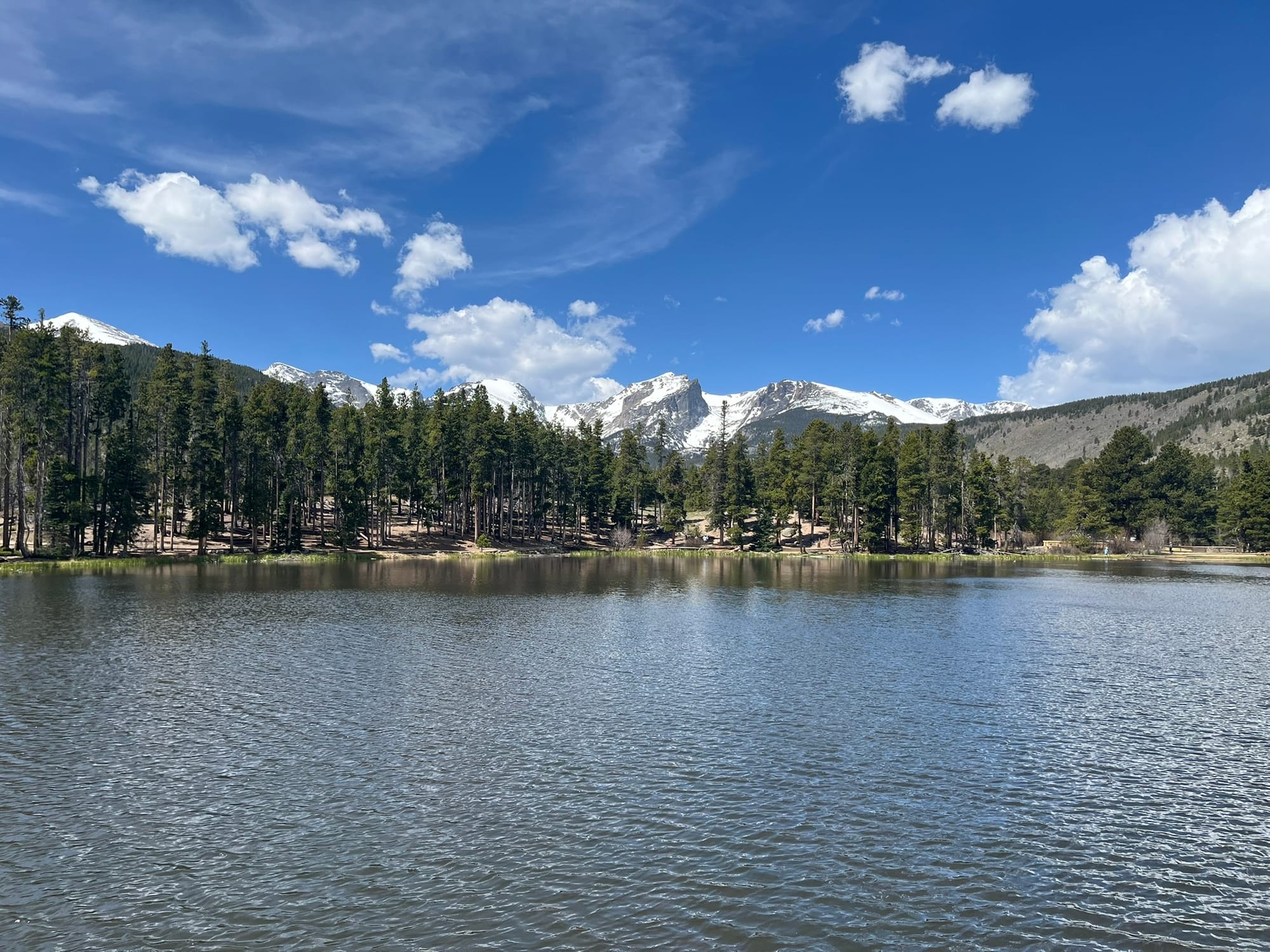
Sprague Lake is a great option for lunch. Sprague Lake is not on the shuttle route, but is within walking distance of the Park-and-Ride. Options include driving from Bear Lake to Sprague Lake, or taking the shuttle back to the Park-and-Ride and either walking or driving to Sprague Lake. It is usually but not always possible to find parking here. There are great picnic tables and flushable toilets during the warmer seasons (May-October). Either before or after your hike, be sure to walk the .75 mile accessible loop around Sprague Lake, with beautiful scenery and the occasional moose or two.
Alternate Option: Hollowell Park
If there is no parking at Sprague Lake, head down the hill back toward the entrance to Hollowell Park, which also has a great picnic area, and often a herd of elk resting in the afternoon.
At this point, you will have been touring for between 5-7 hours depending on your pace. Head back down to the beginning of Bear Lake Road and exit the Bear Lake Corridor and turn left toward Grand Lake and enjoy the open and scenic views, making stops where you wish for pictures or to spend more time on the view. Make a right near the Rabbit Mountain Trailhead where you will see lots of cars parked on the road.
Alluvial Fan
Make a stop at the Alluvial Fan, which is a giant waterfall created by the 1982 Lake Lawn Flood. This is a short, accessible (but in places somewhat steep) walk from the parking lot, and there are many options from viewing the falls from the paved trail, to splashing in the cold mountain water, to climbing up the falls. It is a great place to spend 15 minutes or two hours.
Sheep Lake
After Alluvial Fan, make a left back onto the main road and keep an eye out for bighorn sheep, elk, and moose in the Sheep Lakes. Parking on the roadside is not permitted here, but there is a large parking lot at Sheep Lakes if you see animals and want to stop for a better look.
Exit out the Fall River Road entrance and have a stop for a treat or shop for souvenirs at the Fall River Road visitor center, and check out the animal displays. Or, head into Estes Park to enjoy the town or back to your lodging area to enjoy the evening and rest up for another day.
Day Two Trail Ridge Road
This is another day that is best enjoyed if you get up early. Because you only need timed entry between 9am-2pm for this day, it is entirely possible to do this itinerary without timed entry by entering the park early. Do keep in mind there can be lines to get in, so plan on arriving at the entrance station at 8:30am at the latest without timed entry. If at all possible, start this itinerary by 10am in order to avoid afternoon thunderstorms and make the most of the day.
I recommend entering at the Fall River Road Entrance Station. This will have you drive by the Sheep Lakes area in the morning, at a time when wildlife are more likely to be active; as they day heats up, animals tend to move to higher altitudes and retreat to sheltered places to rest. Look for wildlife as you wind through the park and head to Trail Ridge Road, where you will make a right turn. The amount of time it takes to drive this route is unpredictable, due to traffic, but without stops it is around a 2-hour drive over to Grand Lake.
Rainbow Curve and Forest Canyon Overlooks
As long as it is safe to do so and there is parking available, make short stops at the overlooks of Rainbow Curve and Forest Canyon. The views are amazing, but if you miss one of the viewpoints, don’t worry, there are many!
Tundra Communities Trailhead
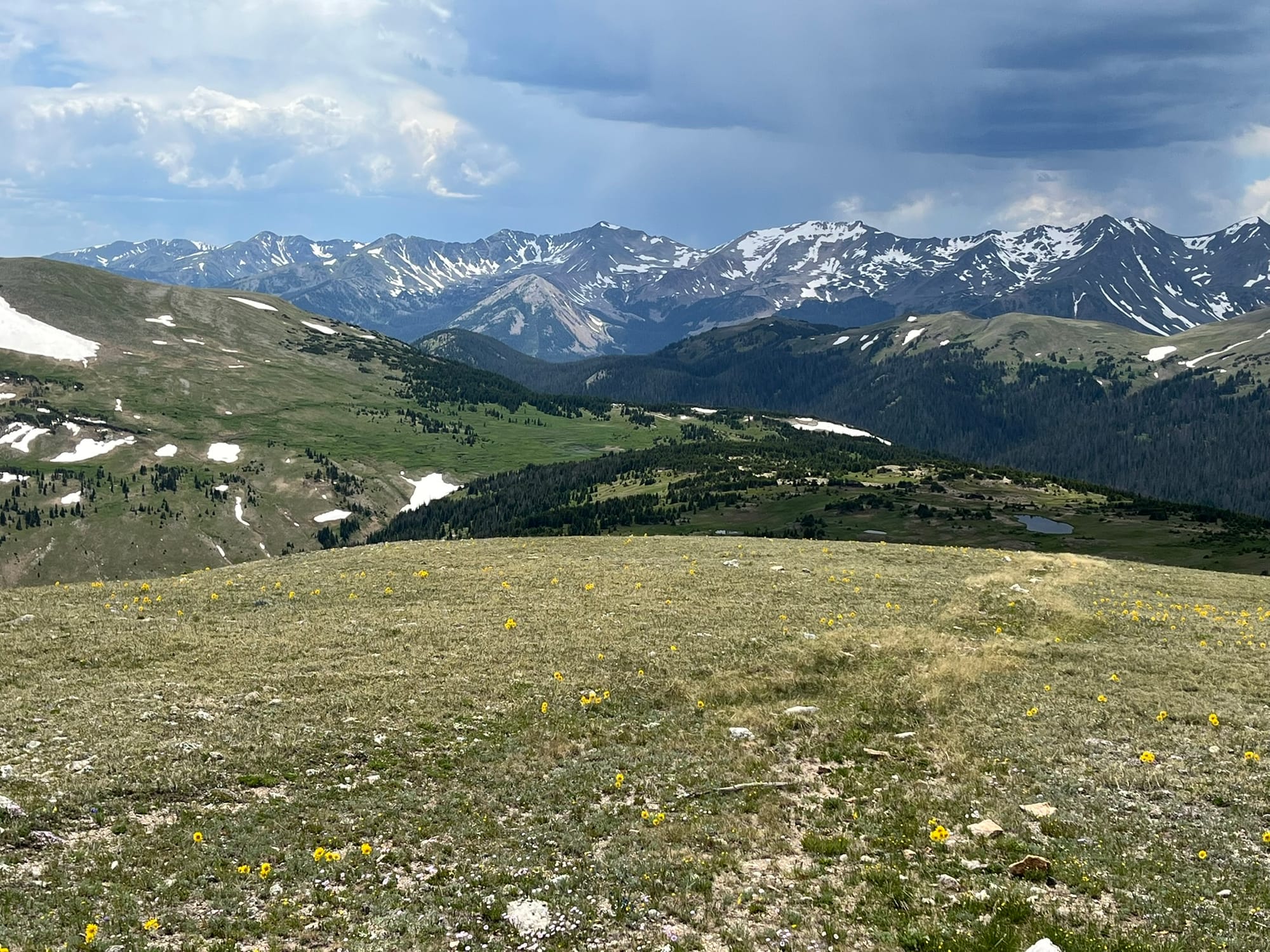
If everyone is feeling up to it, walk the 1.2 mile round trip, out-and-back Tundra Communities Trailhead. This trailhead is at over 12,000 feet, so if anyone is experiencing altitude issues, they should skip the hike and enjoy the views from the trailhead area. This is basically the top of the world, and there are views for miles, as well as the opportunity to experience this fragile, above the tree-line environment. On hot days, there are often herds of elk resting nearby. Don’t forget to stay on the trail, drink a lot of water, and have sun protection for this hike.
Gore Range Overlook and Alpine Visitor Center
If possible, make a stop at the Gore Range overlook, and then head to the Alpine Visitor Center. Parking here can get tricky, especially between about 10:30am-3:00pm; if you are unable to find a spot, consider going to a nearby attraction for a bit and then driving back here, or make sure to return through the park and catch it on the way out.
At the Alpine Visitor Center, be sure to check out the views, displays, gift shop, food options, restrooms, and ask rangers for any information you need. At this high altitude, many people will be uncomfortable, after all, you are 14,000 feet high! There are several trails leaving from here that provide nice views even if you don’t walk very far, if you are feeling up to it and time permits, take advantage of these views. You are likely to be able to see elk or big horn sheep just looking from the visitor center, and this is a great time to break out the binoculars. It may be cold and windy here, even in summer, so it is a great idea to have a sweater or windbreaker handy and hold on to your hat. If anyone in your party is experiencing shortness of breath, cut this visit short and get back on the road and headed down to lower altitude.
Milner Pass and Lake Irene Stops
I recommend stopping for a look at Milner Pass and Lake Irene, but it is also possible to view passing by in the car, depending on how everyone feels about stopping. Next, stop at the Colorado River Trailhead, which is also a great place to have a snack. Follow the trail to view the headwaters of the famed Colorado River, mosquito spray is recommended for this one. This is a very flat hike with panoramic views of the area as well as a few of the beginning of the river.
Holzworth Historic Site
Make a stop at the Holzworth Historic Site to learn about early homesteading in the park, and keep an eye out for moose as you head out through the Grand Lake Entrance Station. Make your way to the East Inlet Trailhead (located outside the entrance station) and make the short (just under one mile round-trip) trek to Adams Falls.
Grand Lake
Head into Grand Lake for lunch where many options are available in this rustic western town. At lunch, decide whether to head back through the park or to take the route described below, keeping in mind that if you entered without a timed-entry, you cannot re-enter the park until after 2pm; most likely this will not be an issue unless you got up REALLY early!
Reasons to go back through RMNP include it is beautiful and you may have missed something on the way up, or you have other things you would like to do in the park. Reasons not to go back through include traffic, and if anyone had altitude issues coming through. If you go back through the park, just reverse the above itinerary and pick up things missed and add on from the park brochures. There is no wrong answer here.
A Drive through the Colorado Rockies back to Your Base
After lunch, if you have opted not to go back through the park, you are going to see more of our amazing Rocky Mountains. Head south on 34 to 40 through Granby, Fraser, and Winter Park, and note the beauty of the mountains in the Winter Park/Mary Jane ski areas. You will merge onto I-70 where you will drive through some of Colorado’s iconic mountains in the I-70 corridor. Get off at exit 143 for the CO-119 Peak-to-Peak highway, which is a national scenic by-way. Make your way back to Estes Park or wherever you are staying. Great places to get dinner include Idaho Springs and Nederland along the route.
At the end of the day, you will be exhausted from the sensory overload of so many majestic mountains and ready for a good sleep.
Things to Consider as You Enjoy Rocky Mountain National Park
Rocky Mountain National Park is a special place and one I know and love dearly. As you also fall in love with the area, consider the many changes these beautiful lands have gone through. There is evidence of Paleo-Indian activity in the park around 12,000 years ago, and Archaic Indian activity from about 2,000-6,000 years ago. More recently, Ute people made their homes in what is now RMNP starting around the years 1200-1300 A.D. Cheyenne and Arapaho people long resided seasonally in the park, and at least five other tribes have been associated with the lands of the park.
The United States claimed the land that is now the park as part of the Louisiana Purchase of 1803 from France, without consulting the Indigenous people who lived there. By the mid-1800s, miners and others moving through the area pushed many Indigenous people to move away. Lulu City was established in the 1870s. The remaining Indigenous people in the park were forcibly removed to reservations by 1878.
German immigrants John and Sophia Holzwarth were the first to homestead in the park, settling in 1917, under the Homestead Act of 1862. This was after the park was established as a national park in 1915. For many years, early settlers and their descendants lived in the park, with some families still having claim to parts of the park.
As you enjoy the park, think of how the same landscapes may have looked decades, hundreds, or even thousands of years ago to other humans who lived or visited here. Consider how the landscape of the park has changed with fires, floods, climatic changes, and time. As you enjoy the park, consider what each of us can do to keep this park beautiful for the next 10,000 years of people to appreciate.