The Magic of Camping in Arches National Park
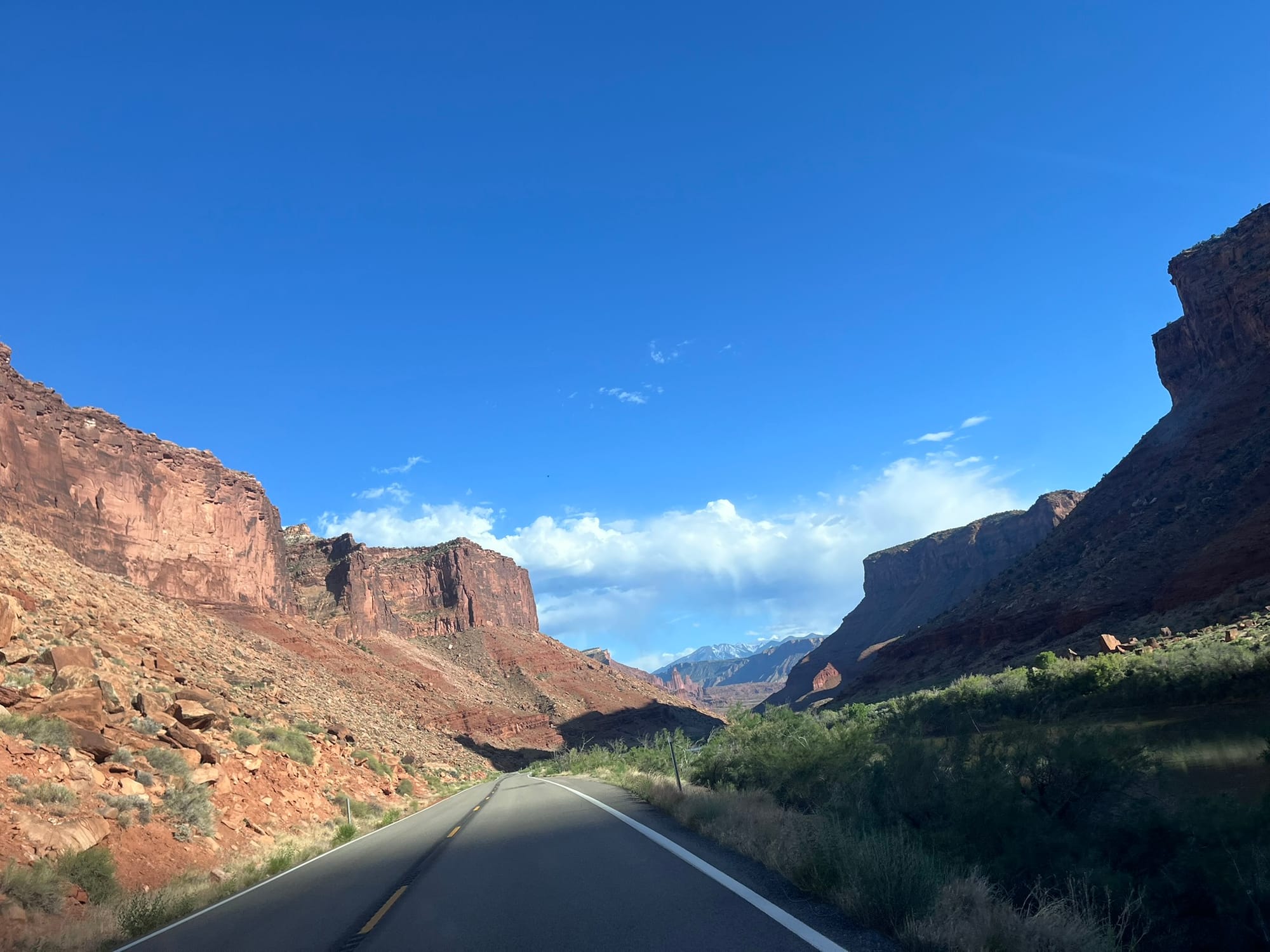
Entering the Red Rocks region around Moab hits in layers, no matter which way you come in. Whether it is that first glimpse of the Colorado River in the canyon against the cyan blue sky of the River Road (UT 128), or the towering cliffs just after entering Arches National Park as you climb in your car through millions of years of strata to the arch-filled wonderland, the awe keeps coming.
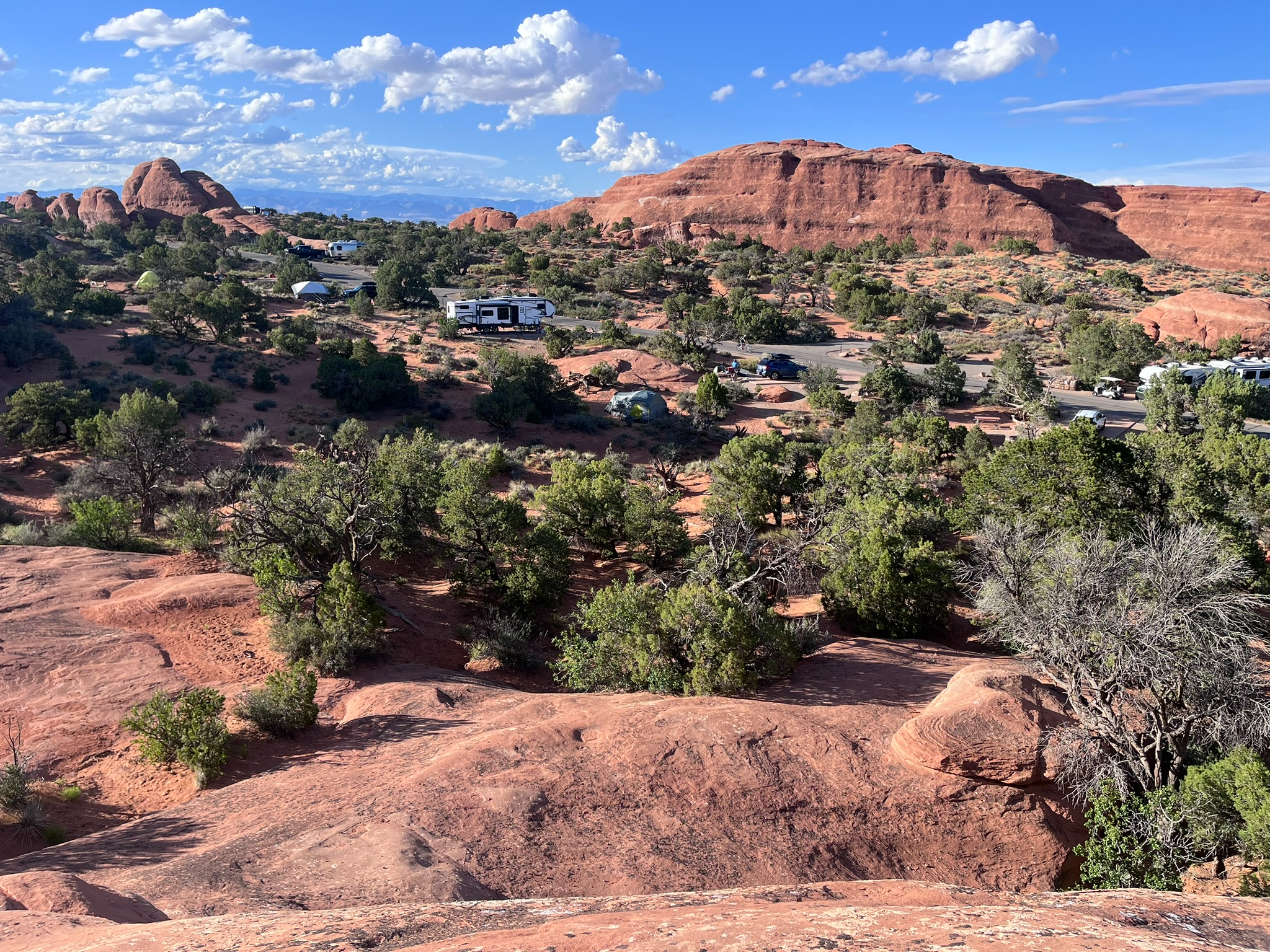
There are many ways to experience the wonders of the Moab area and its two national parks, Arches and Canyonlands, as well as its vast expanse of Bureau of Land Management (BLM) and other public lands. One of our family’s favorite ways is camping in the Devil’s Garden Campground at the back of Arches NP. These coveted spots (there are only 51) go instantly when bookings open up six months in advance. The experience is worth the quick-clicking effort it takes to secure one of these spots.
Pitching a tent here is an experience in desert immersion that allows one to both conjure up Edward Abbey’s rich descriptions of the area from Desert Solitaire and simultaneously to realize that Abbey would completely hate this. Abbey’s deepest fear was that the arid, fragile area would become a Disneyland for mass tourism. The isolated, otherworldly landscape of Abbey’s time is now one of the most loved (and, overloved) public lands areas in the U.S. Staying in the campground is one way to avoid much of the chaos that makes up the modern park and to slowly peel back the layers of the geology and human experiences of the land—whether it be from Abbey’s time, the perspective of European explorers, or the Indigenous people who first encountered this enchanted place.
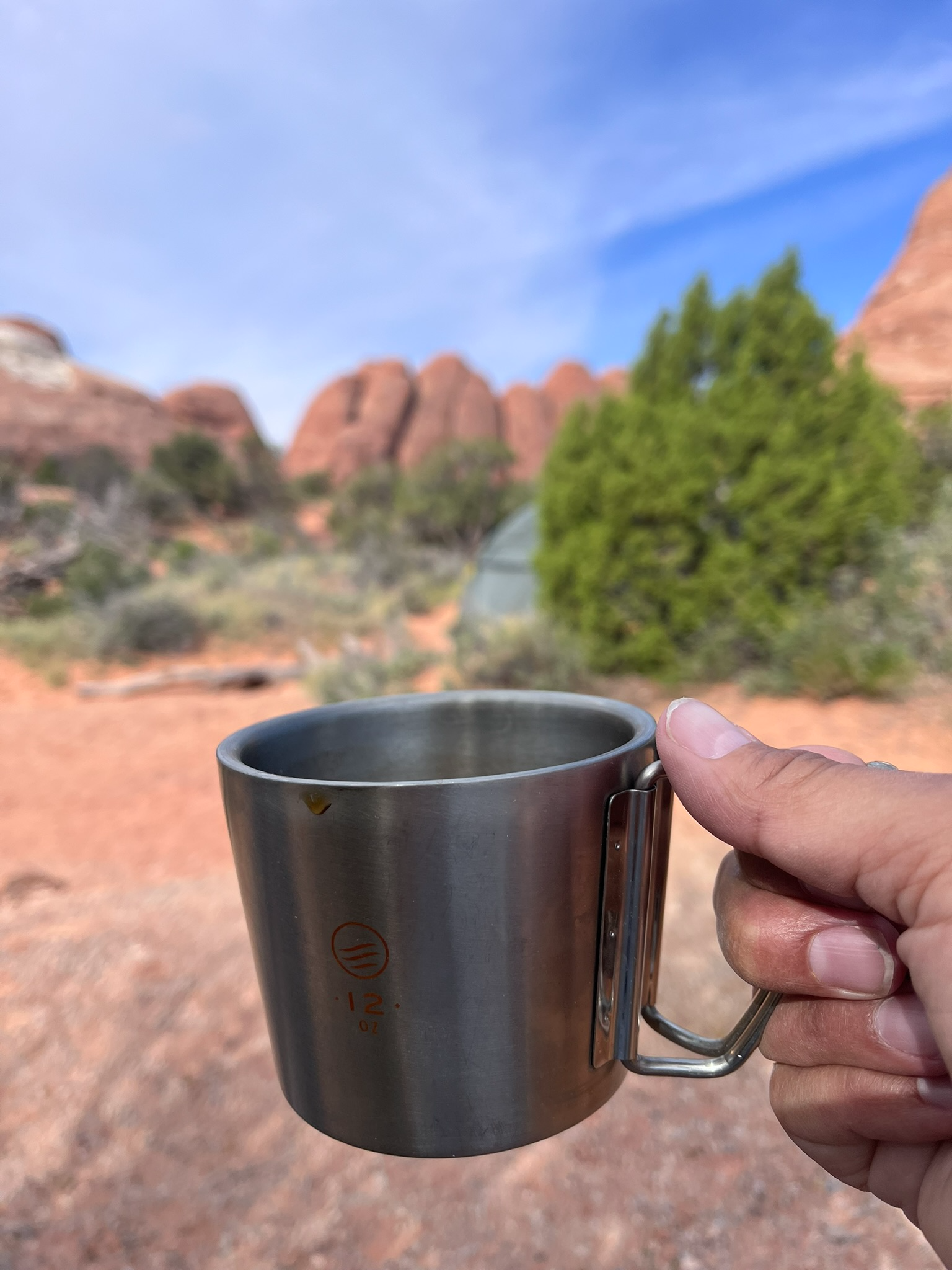
Waking up in the desert happens at its own speed. The light before sunrise gently enters the tent, but the chill in the air makes it difficult to emerge from a cozy sleeping bag. Whether you decide to get up to see the sunrise, or wait for the climbing sun to warm the tent a bit, making coffee on the campstove in the peaceful early morning, with the light hitting the sandstone rocks from a horizontal angle, is a delight. A nice hearty breakfast of oatmeal is a great way to start the day—just watch out for the resident crows, chipmunks, and lizards that would like to share your feast.
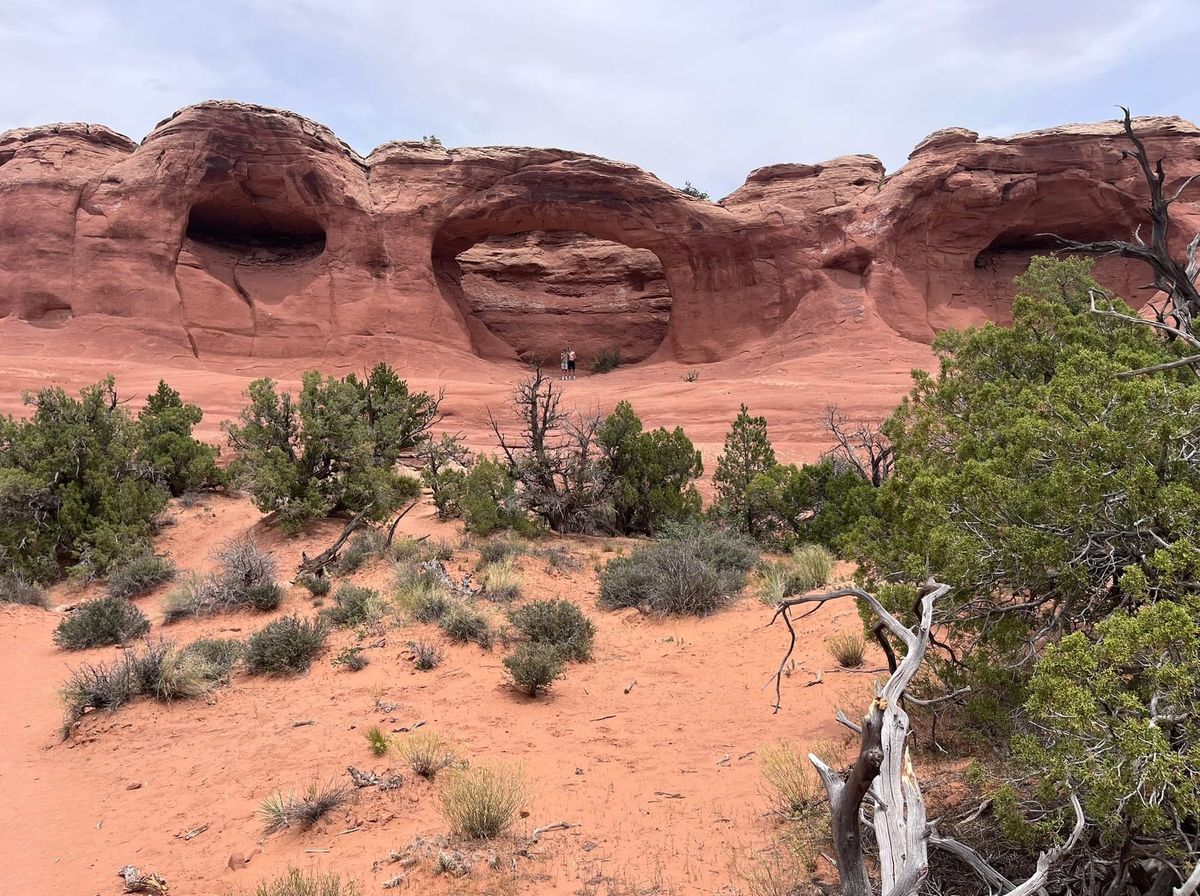
It is possible to enjoy the park without getting back in the car for at least one to two days, whether you are an ambitious hiker or an ambler. We are kind of in the middle. There is a fantastic loop trail with connectors leaving from the campground, the entire hike is approximately 2.5 miles, but keep in mind that 2.5 miles is an easy hike on a 75 degree morning, and a brutal and dangerous hike on a 95 degree afternoon in the direct sun. Carrying around 32 ounces of water per person per hour is advised. Leaving from the north side of the campground, there is pretty quickly a side trail to Tapestry Arch, which does require some scrambling to get to, but is one of my favorite arches in the park. From the perch of the bottom of the arch, the cool and often snow-covered San Juans are visible in the distance. In the shade of the arch, unexpectedly lush vegetation thrives, and looking up, the deep red sandstone of the arch presents a starkly beautiful contrast with the cloudless blue sky.
Back out on the Broken Arch connector trail, there is a variety of scenery with wildflowers in early spring, again with some scrambling over slickrock to get to Broken Arch, which is a fun arch that you actually climb through to stay on the trail and where everyone likes to stop to snap a few photos. Not long after Broken Arch, another side trail breaks off to Sand Dune Arch, which is visible from the trail intersection across an open, exposed expanse of desert.
Sand Dune is a great place to rest in the shade and watch children play in nature’s giant sandbox before heading out on the second half of the hike, back across the open expanse, and then turning left to do the second half of the loop trail. After a short period, you will be scrambling up through the sandstone fins, and appreciate the shade provided in this area. Then it is across more exposed rock with good views of the distance and back to the campground, coming in across the campground to where you began.
To add another arch to this hike, turn left down the campground road until you reach the amphitheater area, where Skyline Arch provides a dramatic backdrop. Taking your time on this hike to enjoy the arches and take some water breaks in the shade is about a 2.5 hour outing. If you are not staying in the campground, this trail can be started from the Sand Dune Arch parking area.
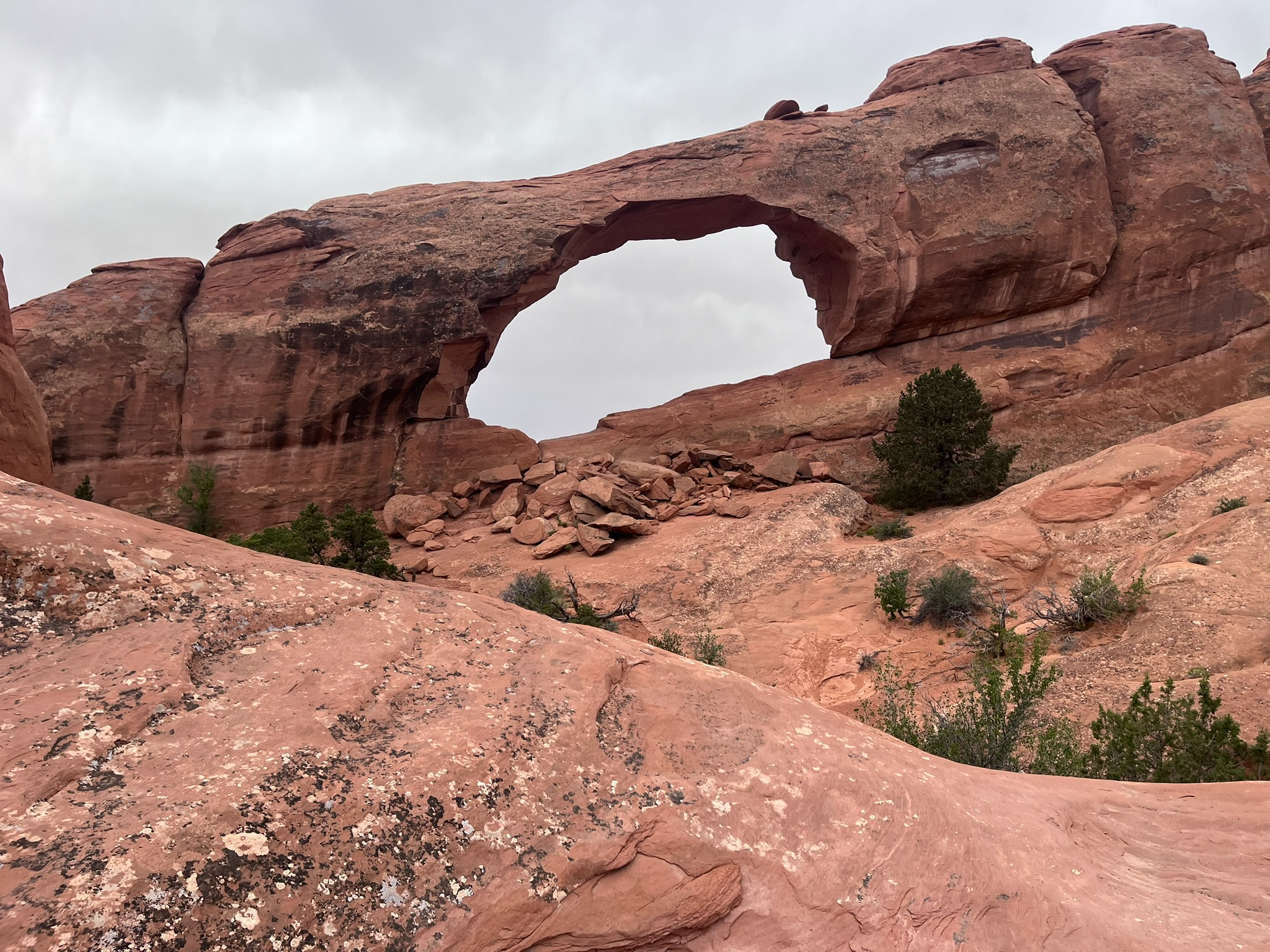
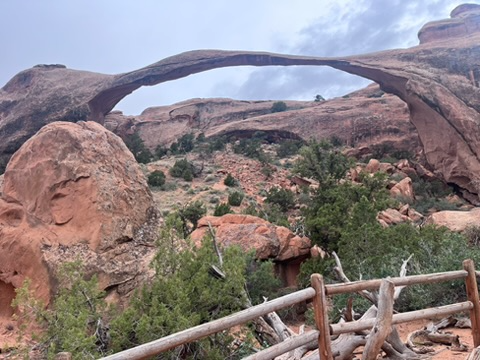
Also accessible from the campground by walking to the campground entrance and across the Devil’s Garden parking area is the trail system leading to Landscape Arch. The hike to Landscape Arch with stops along the way to Tunnel Arch and Pine Tree Arch (another favorite of mine!) is relatively easy and can be completed from the campground in about an hour.
The distance from the campground to the trailhead depends where your campsite is; once reaching the Landscape Arch trailhead, the roundtrip to Landscape including catching the side trails to Tunnel and Pine Tree is right around 2 miles; the Landscape Arch trail is rated as easy, but keep in mind the trail to the two side arches is somewhat steep. More challenging hikes to Partition, Navajo, Double O, Dark Angel, and Private Arches can take a full day or more, all without ever getting back in the car after settling in at the campground.
Back at the campground, a well-earned cold beverage, smores over the campfire, a ranger program at the amphitheater, and some of the most amazing stargazing found anywhere is a relaxing reward after an arch-filled day of hiking. Looking up to the stars and seeing a meteor or two streak the sky, it could be today or a million years ago. Until you notice the satellites blinking their way across the sky. Later, the Milky Way is visible on a moonless night.
Other popular hiking areas in the park such as Delicate Arch, The Windows Section, and Park Avenue are easily accessible by a short drive and the car’s air conditioning can be a welcome respite from the heat of the desert. The Island in the Sky section of Canyonlands National Park, and the popular Corona Arch and Wall Street climbing area can be easily reached by leaving the park by car.
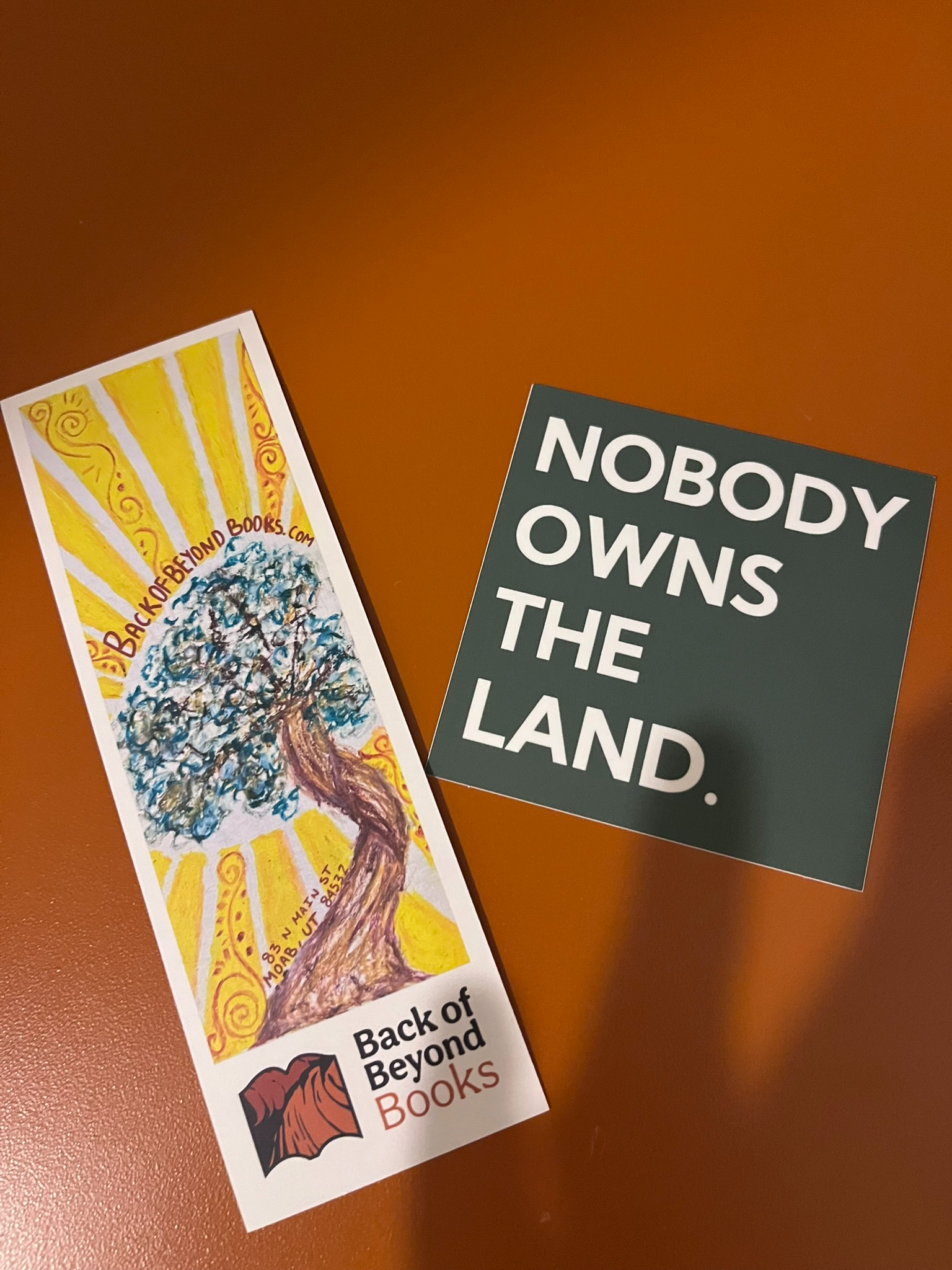
The only downside (if it can be called a downside) of camping inside the park is missing some of the fun of Moab. We like to spend a night or two after our camping trip in town, clean up after days in a tent with a hotel shower, hit Back of Beyond Books to stock up on carefully curated books about the region, and enjoy ice water, local beers, and hearty food at Moab Brewing. Picking up a book like Abbey’s Desert Solitaire or Terry Tempest William’s Finding Beauty in a Broken World can extend the feeling of these unique lands beyond the trip, and the books are even more meaningful when purchased from the area.
Leaving Moab feels a little like arriving in the area, in that one leaves the area in layers as the red rocks and impressive eons-old formations gradually become more spread out and then disappear and it is back to the real world until next time. Even once you get home, you will continue to find specks of the red sand in your shoes and bags, because once you have been to this part of the world, it never really leaves you.
Practicalities
· The River Road (UT 128) is a scenic backway to Moab. The road is not suitable for trailers or RVs and goes through a remote area with no cell service.
· Most of the trail information is available on the NPS website, but for more information on hiking in the area, these two books are recommended:
· Hiking Canyonlands and Arches National Parks: A Guide to more than 60 Great Hikes. Falcon Guides. Author Bill Schneider. (5th edition is the most recent, published in 2023).
· Moab Classic Hikes: 40 Hikes in the Moab Area. Author Damian Fagan. 2007.
· To extend this trip, consider camping in the Canyonlands National Park Island in the Sky area, Dead Horse Point State Park, or Canyonlands National Park Needles area.