Travels in the Ohio Country and America’s 250th Anniversary
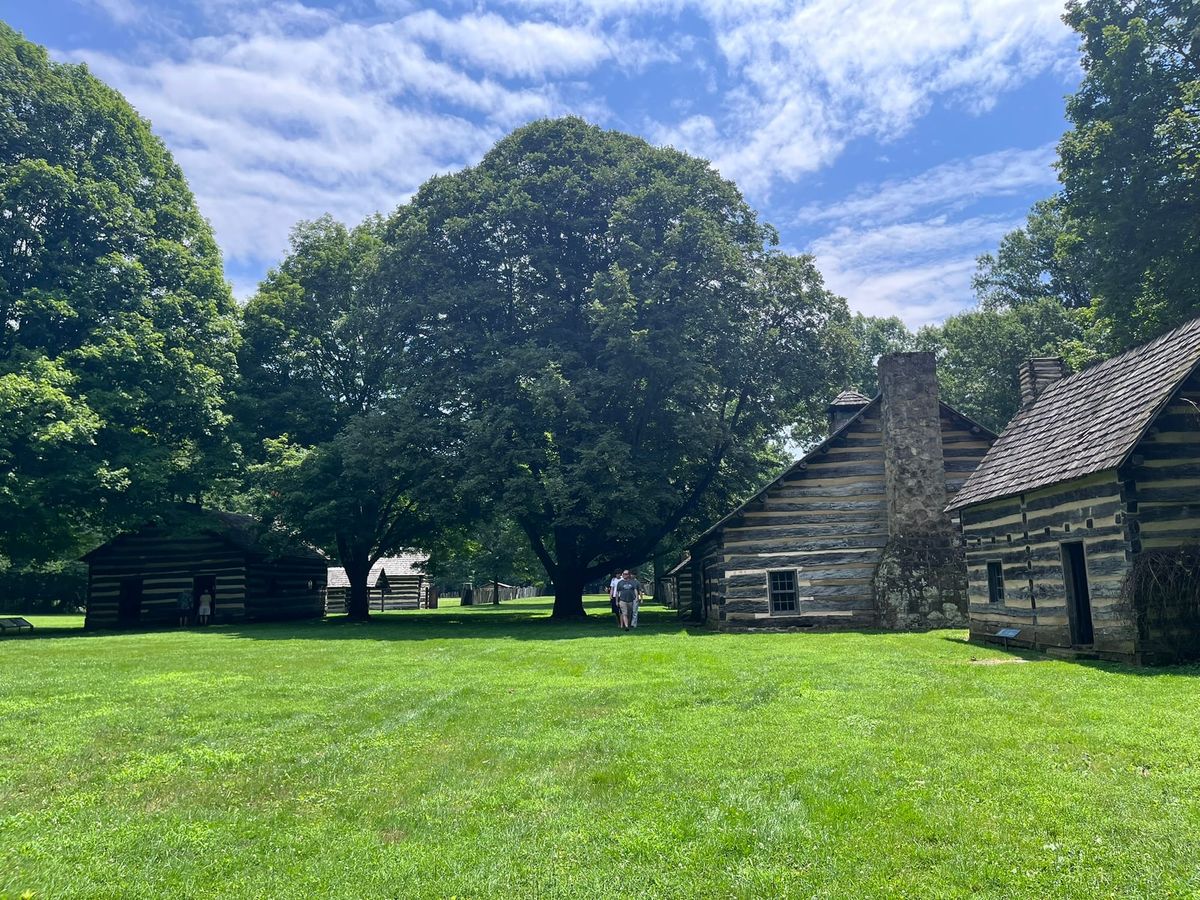
When the United States declared its independence on July 4, 1776, there were 13 states and Ohio wasn’t among them. From the very beginning, though, the Ohio Country was perceived as being part of the new United States, with the states of Virginia, New York, and Pennsylvania claiming large parts of the area under their colonial charters and all thirteen colonies making some claim to the part of the territory. With this in mind, my family recently took a journey back in time to visit two historical sites providing a glimpse into what life was like on the frontier during the Revolutionary period—Schoenbrunn Village and Fort Laurens.
Schoenbrunn Village
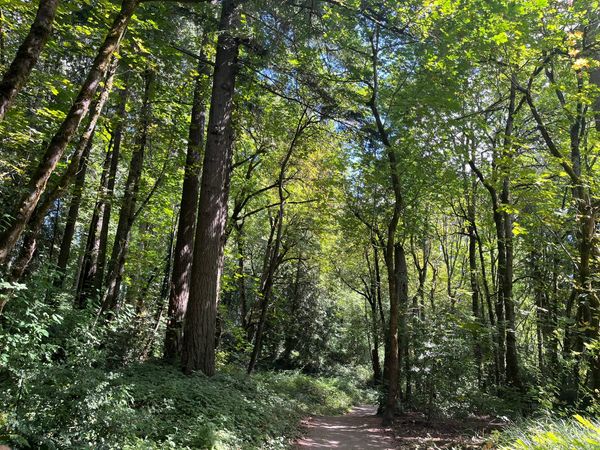
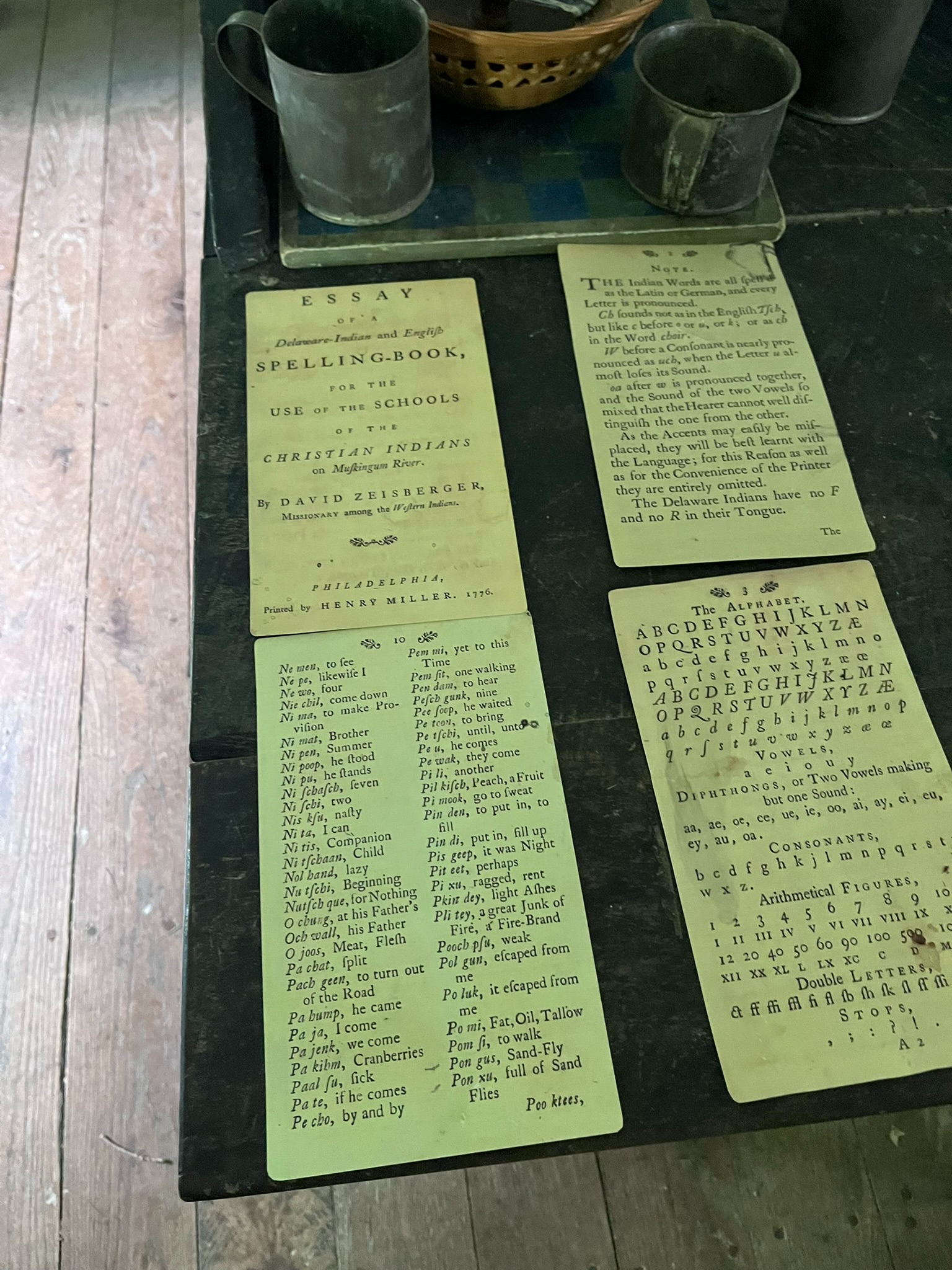
Schoenbrunn Village has been reconstructed after significant archeological study on the site of likely the first European settlement in what is now the state of Ohio. Founded just before nearby Gnadenhutton in 1772 by Moravian missionaries led by David Zeisberger, Schoenbrunn is believed to have had the first school, church, and written code of laws along with being the first European settlement, in the Ohio country. Visiting the reconstructed village, surrounded by woods with giant trees, some of which must have been alive when the settlers arrived, it is possible to think back to what it must have been like for the Lenape Moravians and the missionaries they lived amongst.
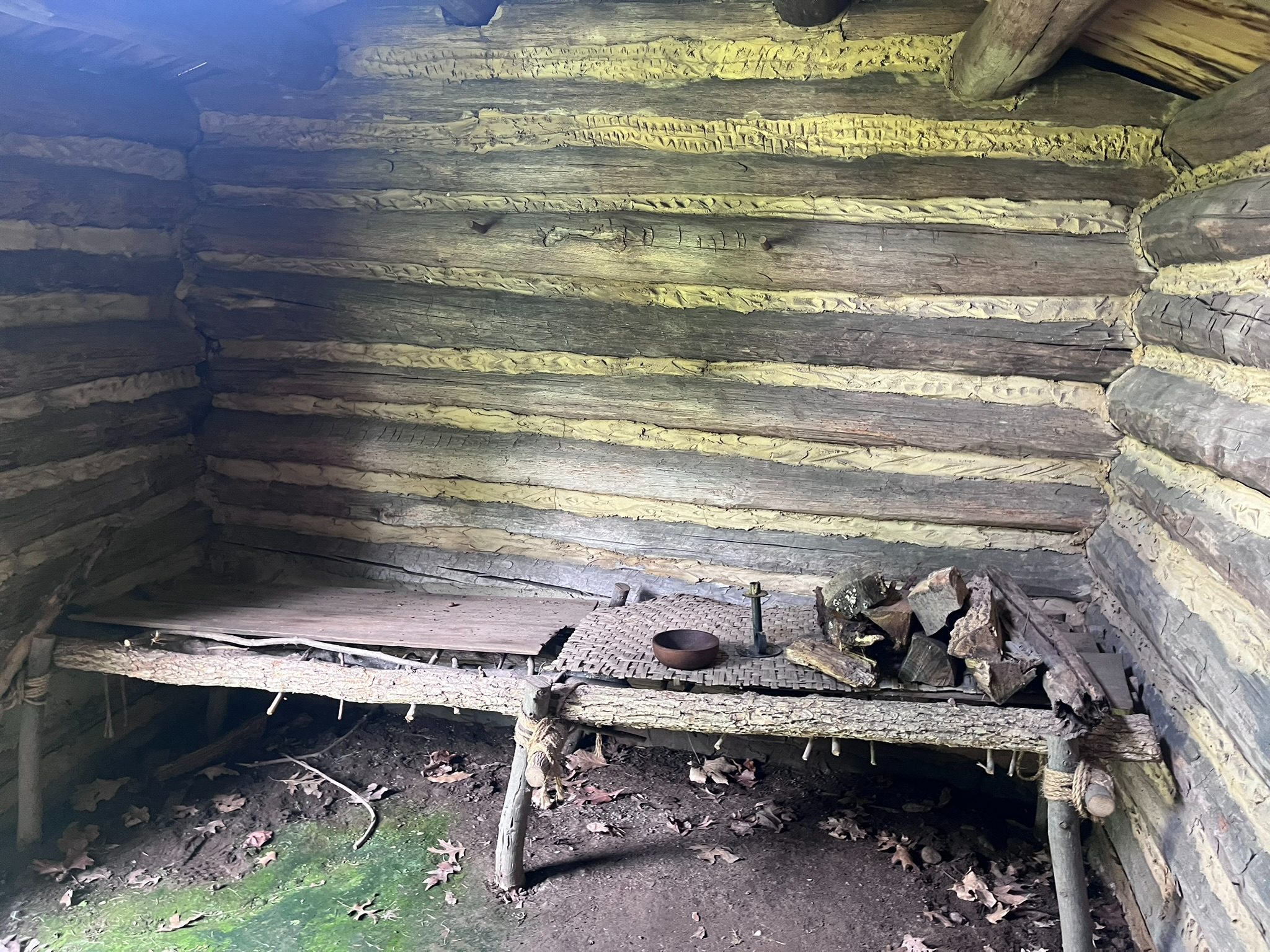
The missionaries were invited to create this settlement, which was beyond the 1763 Proclamation Line and off-limits for colonial settlers according to the British government, by Chief Netawatees (also known as Chief Newcomer) of the Lenape. The Lenape (also known as the Delaware) moved westward from their traditional homelands during the French and Indian War to escape settler violence, and after fighting alongside the British in the French and Indian War, hoped to find peace in their new home beyond the 1763 Proclamation Line. Moravian missionaries hoped to set up communal, pacifist, devout Christian communities among the Lenape and other Indigenous groups, and also moved westward to escape religious persecution as pacifist religious communities such as theirs and the Quakers were targets of settler resentment that they would not help fight against first the French and later the British during the Revolution.
Neither set of refugees who came together in Schoenbrunn achieved their hopes. With the outbreak of the Revolutionary War, these settlements found themselves to be at a crossroads where the British sought to hold the western lands and the new United States sought to claim the area for itself. The local Lenape (led by Chief White Eyes after Chief Netawatees’ death) sided with the United States (formalized in the Treaty of Fort Pitt in 1778), but some Americans questioned their loyalty as they had fought for the British so recently. The Moravians were once again targets for violence against pacifists. In 1777, the community abandoned Schoenbrunn and the community members dispersed, with some finding their way to the nearby Gnadenhutten settlement.
Visiting the reconstructed village in its wooded setting is a reminder of how many dreams different groups of people had about the land that became Ohio, and the conflict, persecution, and hardships that many of them faced. Sides were not clear, allies were not obvious, friends could become enemies and vice versa, and natural dangers such as bears and wolves were ever-present.
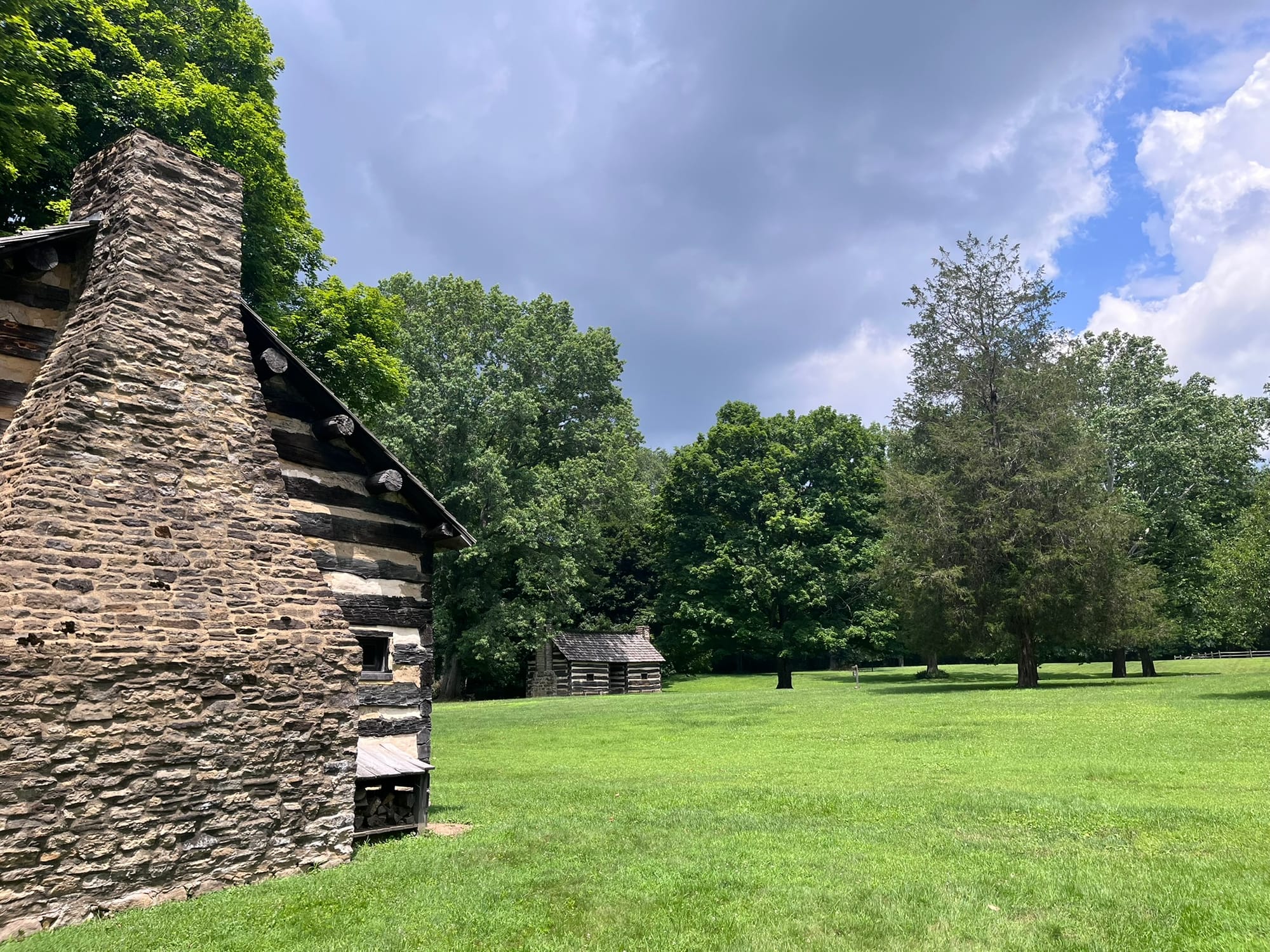
Although Schoenbrunn can help transport us back these formative times, it does miss a few opportunities. First, it was quite odd that neither the movie introducing the site at the visitor center nor the displays in the village mention the Gnaddenhutten massacre during the Revolutionary War in 1782. Schoenbrunn and Gnadenhutten were founded the same year by the same people and when Schoenbrunn dispersed, some of the people moved to Gnadenhutten. By 1782, the missionaries had left and the entire community consisted of Lenape Moravians. The same forces that had hounded both the Lenape and their European fellow-Moravians closed in on March 8, 1782 when a group of Pennsylvania militia massacred the entire town, due to their suspicion about their loyalties, biases against their religious belief, and a growing perception as Indians as a separate, enemy race rather than as groups of people with different beliefs and allegiances.
Telling more of this story of how and why the Moravian missionaries ended up in Ohio, and why they were harassed and subjected to violence and murder would go a long way toward helping us all understand the many origins of people in what is now Ohio, the wide variety of belief systems among different people, the biases and prejudices some brought to the frontier, and the many different possibilities and problems that existed before, during, and after Schoenbrunn’s 1773-1777 existence.
Fort Laurens
It is somewhat harder to conjure up what it must have felt like for the 171 soldiers left to defend Fort Laurens after most of the troops brought in to build the fort retreated to Fort Pitt when arriving at Fort Laurens. Part of the site of the fort no longer exists, as the Ohio and Erie Canal cut through what was one wall of the footprint of the fort in 1832. Later, the Tuscarawas River was moved and I-77 was built in its former riverbed. Now, standing on what once was the fort and looking at the site of the original flag pole, the nearby highway and traffic noise are the first, dominant perception. Taking a deep breath and listening, the sounds of birds and the smell of humid forest near water provide sensory evidence of the piece of wilderness that became Fort Laurens. Fort Laurens was both a remote wilderness and a site of multisided conflict, just as Schoenbrunn Village.
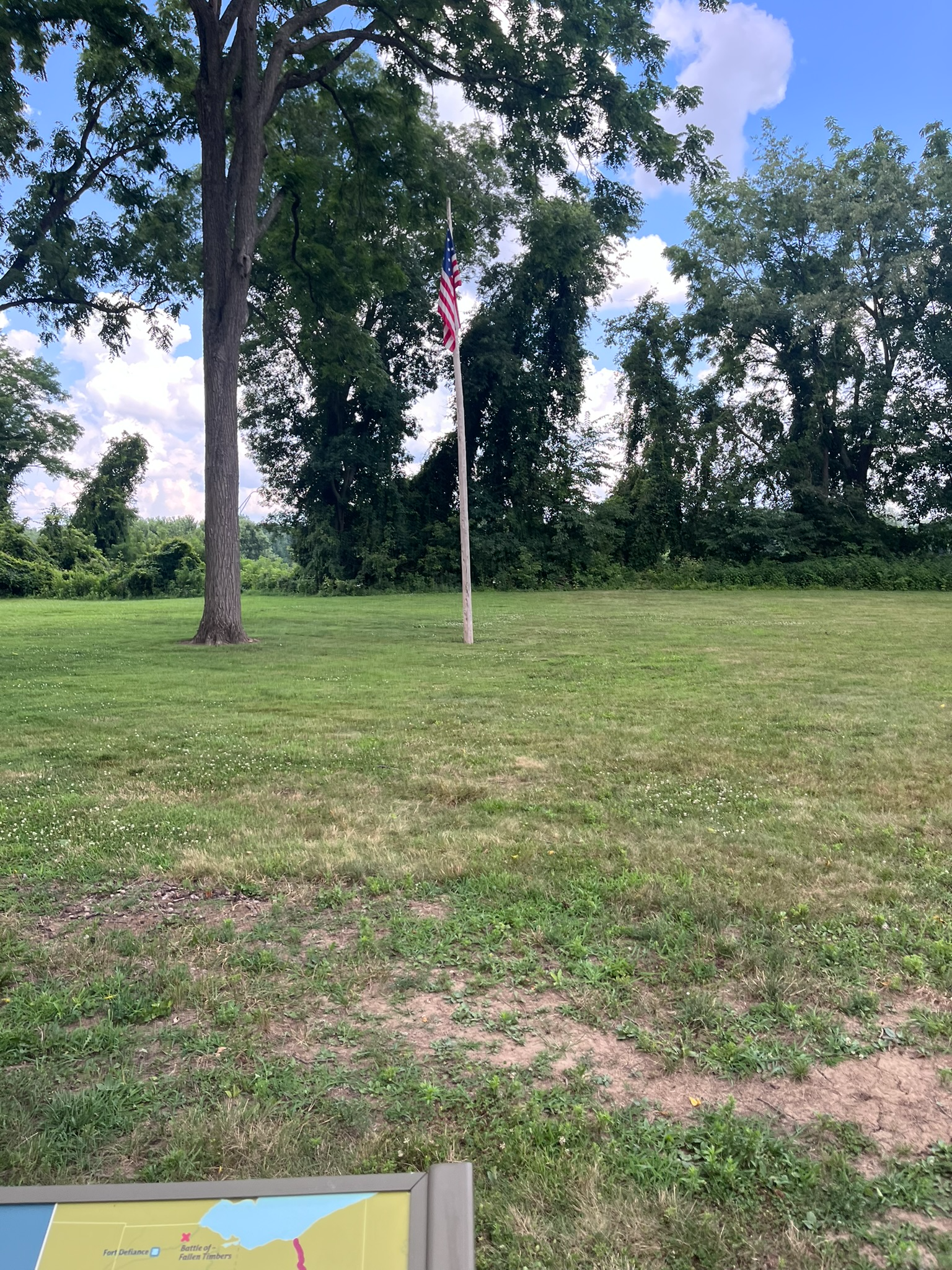
Fort Laurens was built in 1778, 20 miles north of Schoenbrunn Village, and is emblematic of the conflicts that drove the villagers of Schoenbrunn away and ultimately led to the Gnadenhutten Massacre. The story of Fort Laurens is also a reminder of how improbable it is that the United States, with its limited resources, defeated a world superpower in the Revolutionary War. The very idea of Fort Laurens was overly-ambitious and ill-conceived, with deadly results for some of its revolutionary patriots.
Fort Laurens was designed by French military Colonel Louis-Antoine Jean Baptiste, Le Chevalier de Cambray-Digny using European military principles in the star fort style but using Ohio country frontier trees instead of stone for materials. The large fort was planned to extend the American presence in the frontier from Fort Pitt and be a launching point for attacking Fort Detroit, over 200 miles to the west. The job of felling enough trees for the fort fell to the around 1200 troops led by Commander Lachlan McIntosh. Looking at the cleared area around the fort, it is evident that this would have been an impressive feat of human effort for so few people to build such a large and imposing fort. Quickly, it became clear that two things were true: this labor force was too small for the job and also too large to support with the very limited supply lines that could be established over 100 miles from Fort Pitt in a place with no roads. Reaching the site of the Fort in October, the soldiers worked tirelessly but could not complete the fort until December. By that point, it was too late to plan to cross the 200 miles to Fort Detroit during winter, but the fort was also very low on supplies. Due to poor conditions and low supplies, McIntosh took most of his forces back to Fort Pitt as soon as the fort was finished, leaving 171 to guard the fort.
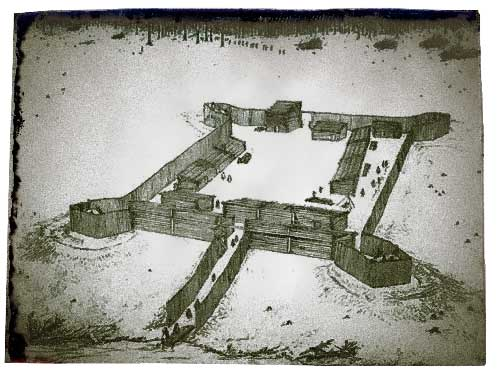
The British sent Simon Girty and a small group of Mingo allies against this American encroachment. Born to settler parents but kidnapped and raised by the Seneca, Girty was a key interpreter in the Ohio Territory and switched sides from the Americans to the British in 1778. Girty’s forces attacked a returning supply mission on their way back to Fort Pitt, took captives back to Detroit, and returned with British regular forces and Mingo, Wyandot, and Lenape who had also switched sides to attack the fort. Seventeen wood-cutters who were outside the fort were ambushed and killed, and two taken prisoner, and the fort was under siege for four weeks. After weeks of starvation rations, the siege was ended on March 24, 1779.
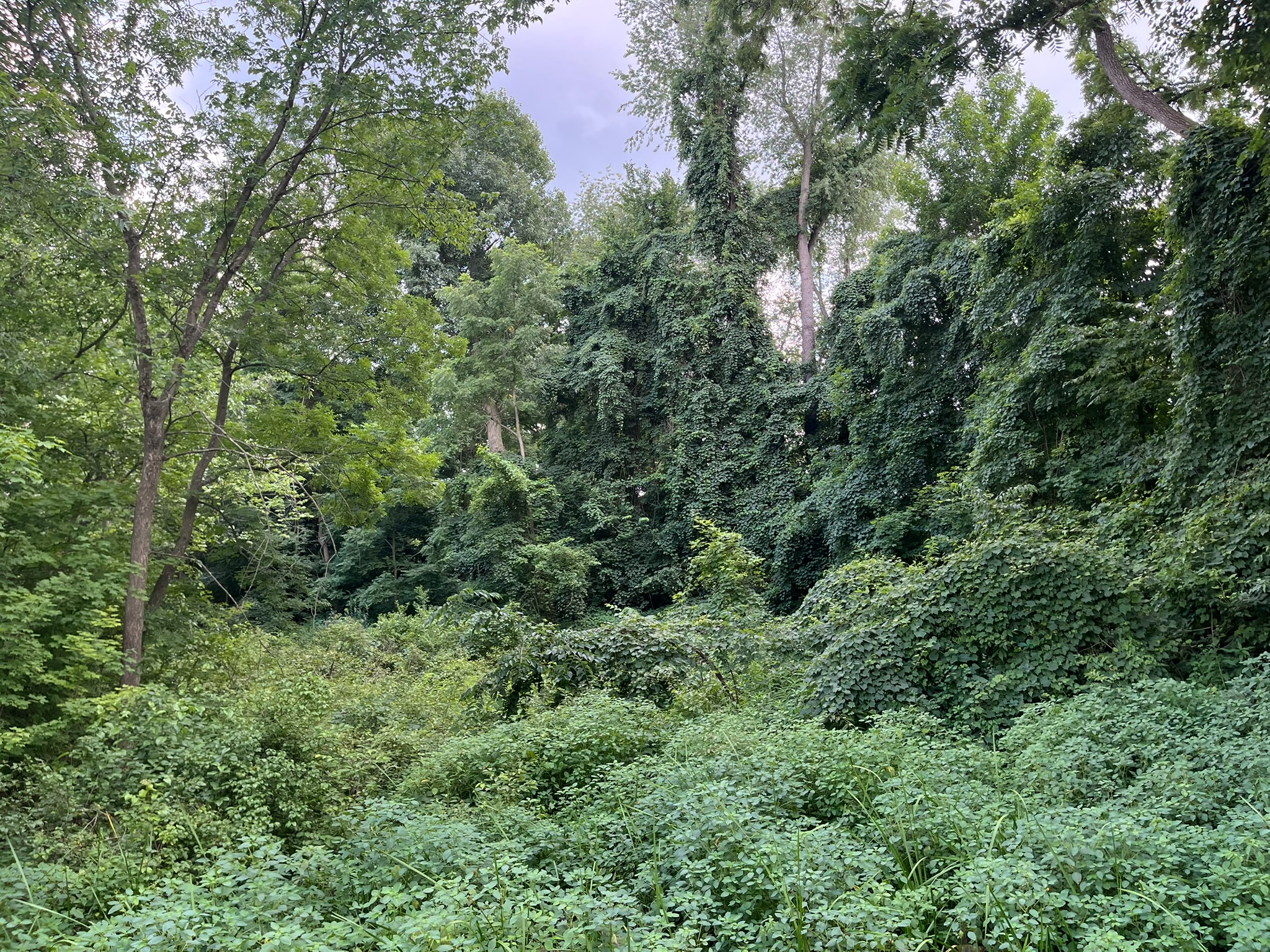
The Americans learned that the wilderness was simply too vast between Fort Pitt and Fort Laurens, and the ability to develop supply lines to Fort Detroit under the conditions and with limited soldiers and militia was beyond the capacity of the U.S. military.
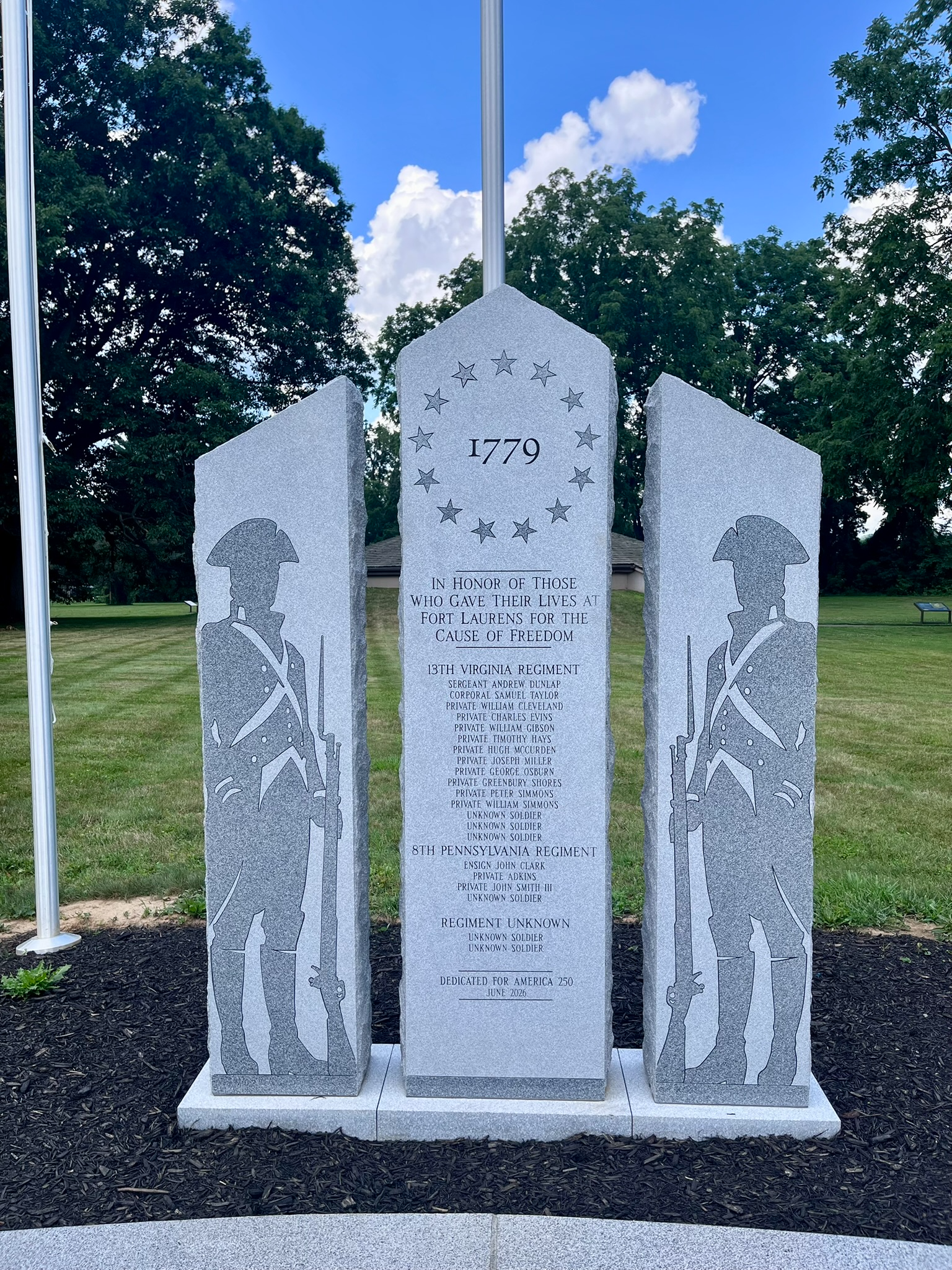
Fort Laurens today holds the remains of the 22 soldiers who died in this ill-fated attempt at extending U.S. influence, including the dedicated in 2026 site of the Tomb of the Unknown Revolutionary War Soldier.
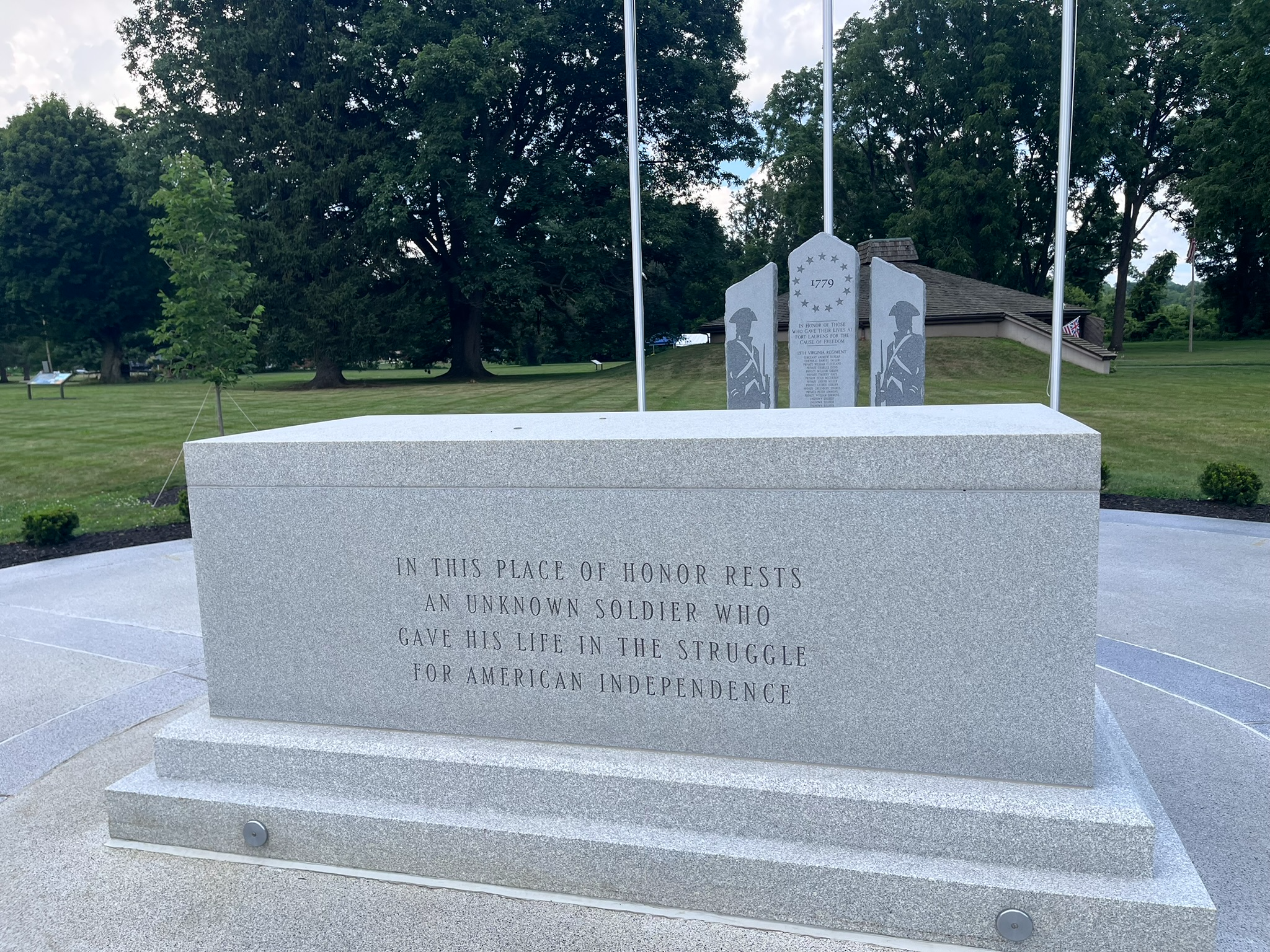
The Ohio Country during the Revolutionary War
Although not one of the original 13 states, Ohio and the larger Ohio Country are part of the origin story of the United States of America, and at 250, it is timely to consider this legacy. The Ohio Country was a site of conflict between the British and the U.S., but also of some Indigenous groups against each other as some sided with the U.S. and others the British, and of some settlers against others as the pacifist Moravian missionaries were harassed out of the area and their converts murdered by Pennsylvania militia soldiers.
In the Treaty of Fort Pitt in 1778, the U.S. signed its first treaty by agreeing to an alliance with the Lenape, to build a fort to protect them, to prevent settlement on Lenape lands, and to supply U.S. forces. This treaty led to the building of Fort Laurens, but like the fort, the diplomacy behind it quickly unraveled as Lenape leader Chief White Eyes died under mysterious circumstances and was believed by many to have been killed by militia troops, the U.S. failed to make payments laid out in the treaty, and the U.S. failed to protect the Lenape Moravians at Gnadenhutten from their own militia forces, let alone the British.
Visiting these sites and others around Ohio offers a window into the complexity of the American Revolution and the many different groups from different backgrounds whose futures were shaped by the founding of the United States.
A Personal Connection
I moved away from Colorado before the current millennium, but my family roots in Ohio are deep and it was wonderful to share this trip with parents, sister, and nephew who all still live there as well as with my husband and Colorado-born children. In addition to a shared experience, we have a more personal connection to Fort Laurens.
We believe that my 6th-great-grandfather, Henry Dorton, was at Fort Laurens as he served during the Revolutionary War, according to his Revolutionary War pension file. Henry Dorton was indentured at birth for the offenses of being born to an unmarried, indentured-servant mother and being presumed to be of mixed race. Dorton was likely freed from his indenture in his 20s and moved westward to the wilderness community of Redstone in Pennsylvania. From there, he was drafted into the Pennsylvania militia in 1777 and served periodically throughout the rest of the war, including at Fort Laurens and Fort Pitt.
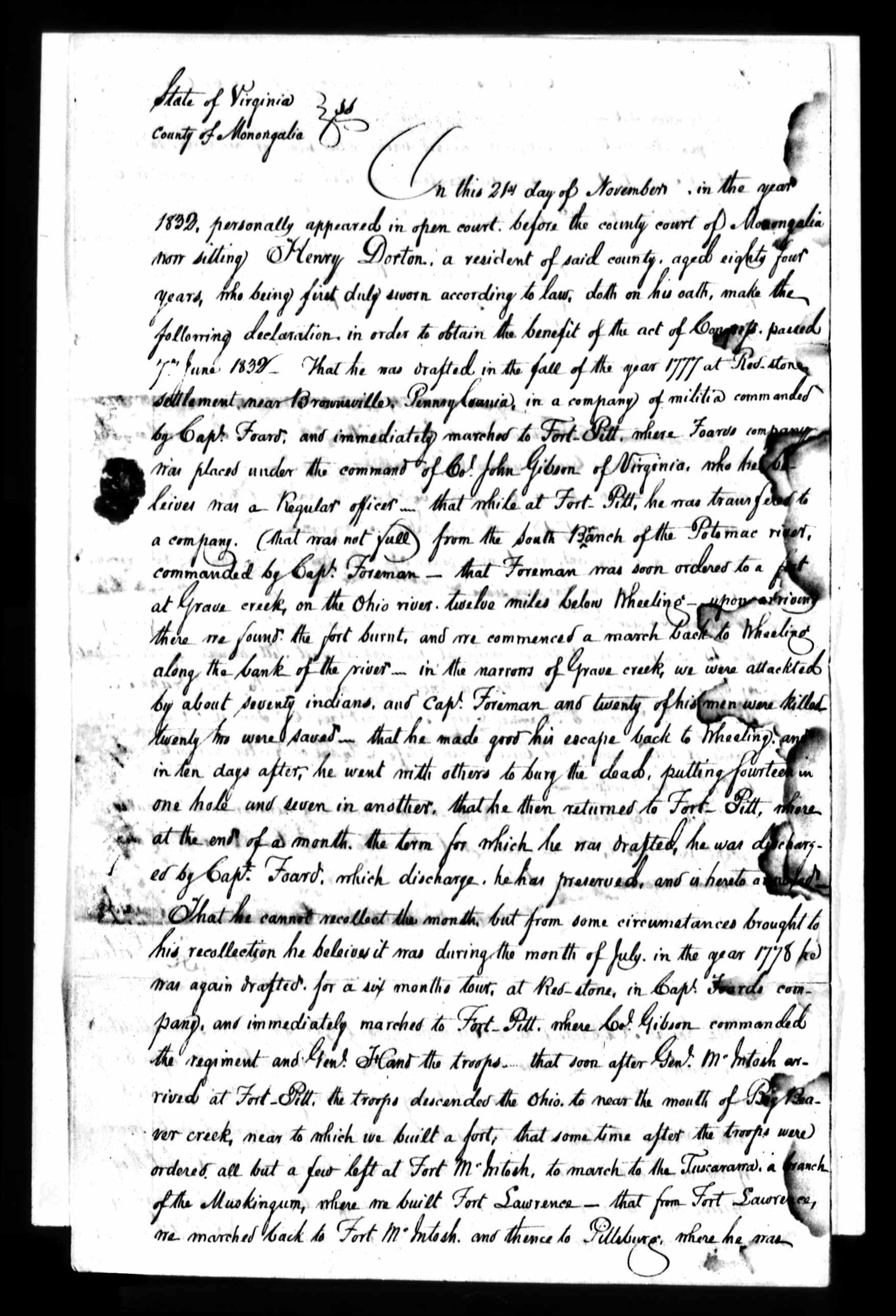
Dorton is just one of many Revolutionary War soldiers in my family tree. Standing in the same place where he endured the privations of Fort Laurens was deeply moving. The stories of all the people we learned about at these two sites reflect the rich and complicated story of the Revolution, and of the United States.